
HYD: Metro Rail to Run in the Middle of the Road – Faster Connectivity, Lower Costs
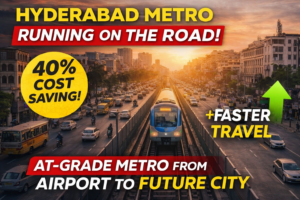
Hyderabad is witnessing rapid infrastructure growth, and the expansion of the metro network is a key part of the city’s development plans. In a bold and innovative move, metro authorities have decided to construct a major stretch of the upcoming metro corridor from Shamshabad Airport to Future City directly at ground level (At-grade), instead of the conventional elevated or underground format.
This decision is being considered a strategic step toward reducing construction costs while maintaining efficient urban connectivity. Approximately 17 kilometers of this new corridor will be built at ground level, making it one of the most unique metro expansions in the city.
At-Grade Metro Track – A Cost-Effective Approach
Traditionally, metro rail systems are constructed on elevated pillars or underground tunnels. Both methods involve heavy civil construction and significantly increase project expenses. However, in this case, authorities identified a major advantage — a 100-meter-wide road stretch along the proposed route.
With sufficient road width available, officials have decided to lay the metro track in the center of the road. The track will be secured with proper fencing to ensure safety and prevent interference from regular traffic. By avoiding elevated structures and pillars for this 17-kilometer stretch, construction costs are expected to reduce by nearly 40 percent per kilometer.
This reduction in cost is considered a major financial advantage for the government. Metro rail projects typically require thousands of crores in investment. Saving nearly 40% per kilometer can significantly reduce the overall project expenditure.
Metro Running Amid Road Traffic
One of the most interesting aspects of this project is that the metro will run along the center of an active roadway, with vehicles moving on both sides. However, the metro track will be completely separated from road traffic using secure fencing and controlled crossings.
Authorities are planning advanced signaling systems, well-designed intersections, underpasses, and traffic management strategies to ensure smooth operations. Passenger safety remains the highest priority. Proper planning is being carried out to prevent traffic congestion and ensure that the metro runs efficiently without disrupting road movement.
Boost to Airport Connectivity
Metro Rail to Run in the Middle of the Road Shamshabad Airport is a major transportation hub, handling thousands of passengers every day. Currently, airport travel largely depends on road transport, which often faces heavy traffic congestion during peak hours. Travel time to and from the airport can vary significantly.
With the introduction of metro connectivity, passengers will benefit from faster, predictable travel times. The metro corridor will provide a reliable and efficient transport option, reducing dependency on private vehicles and taxis. This will not only ease road congestion but also improve overall travel convenience Metro Rail to Run in the Middle of the Road
Future City Development Gets a Major Push
Metro Rail to Run in the Middle of the Road The proposed Future City is envisioned as a next-generation urban development zone with IT hubs, commercial spaces, residential projects, and industrial growth. Efficient public transportation plays a crucial role in attracting investors and businesses.
Metro connectivity to Future City will significantly enhance its accessibility and real estate value. Infrastructure development often drives property demand, and improved connectivity typically results in faster urban expansion. Investors, developers, and homebuyers are likely to show increased interest in areas connected by metro services Metro Rail to Run in the Middle of the Road
Environmental Benefits
Metro rail systems are considered environmentally friendly transportation solutions. By encouraging people to shift from private vehicles to public transit, metro services help reduce fuel consumption and carbon emissions Metro Rail to Run in the Middle of the Road
Since this corridor will be constructed at ground level, the need for massive concrete structures will be minimized. This approach may also reduce the overall environmental impact of construction. In the long term, improved public transport can contribute to better air quality and reduced traffic congestion in Hyderabad.
Technical and Operational Challenges
While the at-grade model offers cost advantages, it also comes with challenges. Managing traffic flow along a busy road with a metro line in the center requires careful planning. Proper drainage systems must be implemented to avoid waterlogging during monsoon seasons.
Advanced signaling and monitoring systems will be essential to maintain operational efficiency. Speed regulations, pedestrian safety measures, and emergency response systems must be carefully designed. Authorities are expected to implement international safety standards to ensure seamless operations.
A Model for Future Metro Expansion
If successful, this project could serve as a model for future metro expansions in Hyderabad and potentially other cities. The ability to reduce costs without compromising efficiency could transform how urban transit projects are executed in India.
Urban planners are closely observing such innovative approaches, especially in rapidly growing metropolitan cities where budget constraints and land availability are common challenges Metro Rail to Run in the Middle of the Road
Conclusion
Metro Rail to Run in the Middle of the Road The decision to construct a 17-kilometer at-grade metro corridor between Shamshabad Airport and Future City marks a significant milestone in Hyderabad’s infrastructure development. By utilizing the available 100-meter-wide roadway, authorities aim to reduce construction costs by nearly 40% per kilometer while delivering efficient and modern transport connectivity.